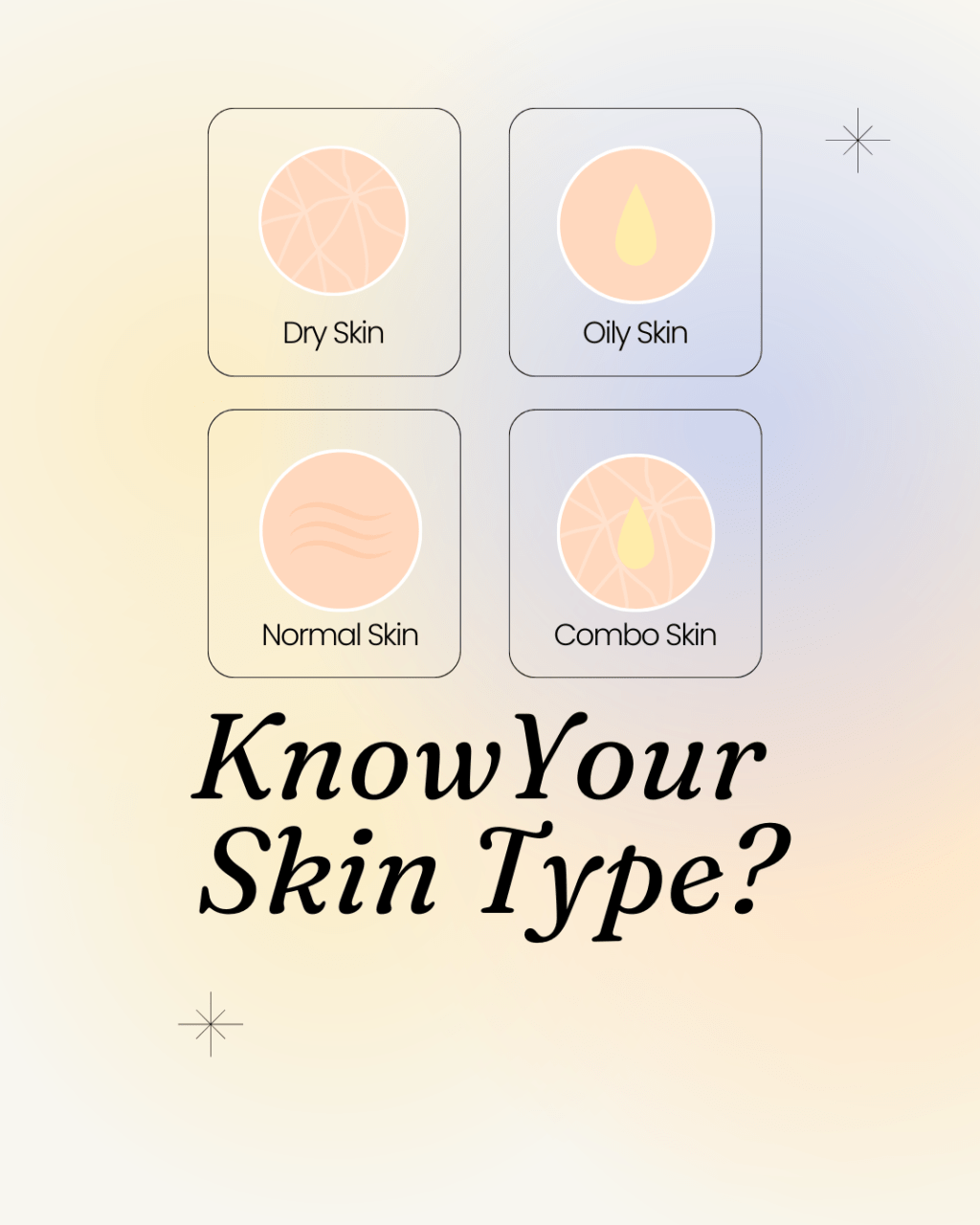
Know Your Skin Type to Discover the Best Products for a Healthy Skin Routine
We all have unique skin, but do you know your skin type exactly? Knowing your skin type is the first step to unlocking the secret to clear, radiant skin. If you’re unsure, you might be using the wrong products or adopting the wrong skincare routine for your skin’s needs. In this post, we’ll dive deep into skin types, how to determine your own skin type, common skincare mistakes to avoid, and the best products to match your skin’s unique characteristics.
KnowYour Skin Type & Understand Why It Matters
Getting to know your skin type is crucial because it dictates the types of products and routines that will give you the best results. Let’s explore the five main skin types, their unique features, and why identifying your skin type is the key to skincare success.
1. Oily Skin
Oily skin produces excess sebum, leading to a shiny appearance, especially in the T-zone (forehead, nose, chin). People with oily skin may also experience clogged pores, blackheads, and acne. Oily skin needs products that balance oil production without stripping the skin of essential moisture.
2. Dry Skin
Dry skin can feel tight, flaky, or rough, especially after washing. It may have visible dry patches, redness, or irritation. This skin type often lacks moisture and requires a skincare routine that focuses on hydration and gentle exfoliation to remove dead skin cells.
3. Combination Skin
Combination skin is a mix of oily and dry areas. The T-zone tends to be oily, while the cheeks and other areas may be dry or normal. Skincare for combination skin requires a balancing approach, ensuring that both the oily and dry zones are properly addressed.
4. Sensitive Skin
Sensitive skin is prone to irritation, redness, itching, and burning. It can react to skincare products, environmental factors, or stress. The best skincare for sensitive skin involves gentle, calming products with minimal ingredients to avoid triggers.
5. Normal Skin
Normal skin is well-balanced—not too oily or dry. It’s less likely to develop blemishes, irritation, or dryness. While normal skin can handle a variety of products, maintaining hydration and protecting the skin barrier is essential.
Why is knowing your skin type so important?
If you know your skin type, this knowledge helps you avoid skincare mistakes that could make your skin worse. Using the wrong products or overloading your skin with unnecessary treatments can lead to breakouts, dryness, irritation, or even damage. Properly matching your skincare routine to your skin type allows for better absorption of products, improved skin health, and enhanced results.
Know Your Skin Type – Find Out With The At-Home Test
If you’re unsure of your skin type, don’t worry! You can easily perform an at-home test to determine your skin’s natural state. Here’s a step-by-step guide:
The Bare-Faced Test
- Cleanse your face with a gentle cleanser to remove makeup, dirt, and oils.
- Leave your skin bare—no products, no moisturizer, just clean skin.
- Wait for about an hour to allow your skin to return to its natural state.
- After an hour, assess how your skin feels:
- If your skin feels tight and dry, you likely have dry skin.
- If your T-zone (forehead, nose, chin) is oily and shiny but your cheeks feel fine, you’re probably dealing with combination skin.
- If your entire face feels oily and looks shiny, you’re most likely experiencing oily skin.
- If your skin feels comfortable, balanced, and not dry or oily, you have normal skin.
- If your skin reacts with redness, itching, or irritation, you have sensitive skin.
When to See a Dermatologist
If you experience persistent confusion about your skin type or notice stubborn issues like acne or irritation that don’t improve with typical skincare products, a dermatologist can help clarify your skin’s needs and guide you toward effective treatments.
Know Your Skin Type & Avoid Common Skincare Mistakes
Not understanding your skin type can lead to a variety of skincare mistakes that can damage your skin. Here are some common pitfalls to watch out for:
1. Using Harsh Products
Many people with dry skin mistakenly use harsh exfoliators or alcohol-based toners, thinking it will get rid of impurities. This only exacerbates dryness and irritation.
2. Over-moisturizing Oily Skin
People with oily skin might think that moisturizing will add to their oiliness, so they skip it. However, skipping moisturizer can actually lead to the skin producing even more oil in compensation.
3. Using Wrong Sunscreen
If you have sensitive skin, you might use a sunscreen with fragrances or harsh chemicals, which could trigger reactions. Always opt for a gentle, fragrance-free option suited to sensitive skin.
4. Over-exfoliating
Exfoliation is important, but overdoing it can cause damage to the skin’s barrier, leading to dryness, irritation, and increased sensitivity.
5. Using Incompatible Products
Using products that are too heavy or too light for your skin type can lead to imbalanced skin. For example, heavy creams may clog pores and worsen acne in oily skin, while light gels may not provide enough moisture for dry skin.
Know Your Skin Type to Learn What To-Do & What Not-To-DO
Now that you know how to identify your skin type and the mistakes to avoid, let’s discuss some important dos and don’ts for different skin types.
For Oily Skin:
- Do: Use lightweight, oil-free moisturizers and non-comedogenic products.
- Do: Choose gel-based or foaming cleansers to remove excess oil.
- Don’t: Skip moisturizing altogether—hydration is key.
- Don’t: Use harsh scrubs, which can irritate the skin and lead to more oil production.
For Dry Skin:
- Do: Use rich, creamy moisturizers that focus on hydration and nourishment.
- Do: Incorporate a hydrating toner or essence into your routine.
- Don’t: Use hot water to cleanse your face, as it can strip away natural oils.
- Don’t: Use harsh exfoliators that can worsen dry patches.
For Combination Skin:
- Do: Use a gentle cleanser that won’t strip the skin but can handle the T-zone’s oil.
- Do: Apply a lightweight moisturizer that hydrates without adding extra oil.
- Don’t: Apply the same products across your entire face—customize your routine for different areas.
- Don’t: Overuse pore-stripping products in the T-zone.
For Sensitive Skin:
- Do: Choose fragrance-free, hypoallergenic products.
- Do: Use soothing ingredients like aloe vera and chamomile to calm irritated skin.
- Don’t: Try too many new products at once, as this could lead to a reaction.
- Don’t: Use physical exfoliants that can scratch and irritate the skin.
For Normal Skin:
- Do: Stick to a simple skincare routine with a gentle cleanser and moisturizer.
- Do: Continue to protect your skin from the sun with SPF daily.
- Don’t: Overcomplicate your skincare routine—it’s easy to get caught up in trying too many products.
Know Your Skin Type to Find the Best Products for Your Skin Type
If you know your skin type, then you are one step closer to finding skincare products that can give you glowing and healthy skin. Choosing the right skincare products all depends on your skin type because each skin type has different needs, reactions, and features. Finding the right products for your skin type is essential to maintaining healthy, glowing skin. Here are some product recommendations for each skin type:
Oily Skin:
- Best Cleanser: Gel-based or foaming cleansers with salicylic acid or benzoyl peroxide.
- Best Moisturizer: Lightweight, oil-free moisturizers with hyaluronic acid.
- Best Sunscreen: Oil-free, mattifying sunscreens with broad-spectrum SPF.
Dry Skin:
- Best Cleanser: Cream-based cleansers or hydrating cleansers with ceramides and glycerin.
- Best Moisturizer: Rich, emollient creams with shea butter or squalane.
- Best Sunscreen: Hydrating sunscreens with SPF 30+ and added moisture.
Combination Skin:
- Best Cleanser: Gentle foaming cleansers or micellar water.
- Best Moisturizer: Lightweight lotions with hydrating ingredients like aloe vera.
- Best Sunscreen: Oil-free, lightweight sunscreen with SPF 30+.
Sensitive Skin:
- Best Cleanser: Fragrance-free, mild cleansers with soothing ingredients like chamomile or aloe.
- Best Moisturizer: Calming creams with ceramides or colloidal oatmeal.
- Best Sunscreen: Mineral sunscreens with zinc oxide or titanium dioxide.
Normal Skin:
- Best Cleanser: Gentle, non-foaming cleansers or micellar water.
- Best Moisturizer: Lightweight moisturizers with antioxidants and hyaluronic acid.
- Best Sunscreen: Broad-spectrum sunscreen with SPF 30+.
Top Skincare Picks by Skin Type
Not sure which products actually work for your skin? We’ve curated dermatologist-approved favorites for oily, dry, combination, and sensitive skin to make your skincare routine simple and effective.
Know Your Skin Type for Healthy Skin
To know your skin type and use the right products for your specific needs is the foundation of achieving flawless, healthy skin. Avoid common skincare mistakes, follow your skin’s natural rhythm, and nourish it with products designed to enhance your skin type’s unique features.
By identifying your skin type and customizing your routine, you can say goodbye to frustrating skincare woes and hello to radiant, glowing skin. Don’t forget to explore our curated selection of digital skincare resources for more tips and tools to optimize your skincare routine.
 SkinSavvyNurse
Leave a comment